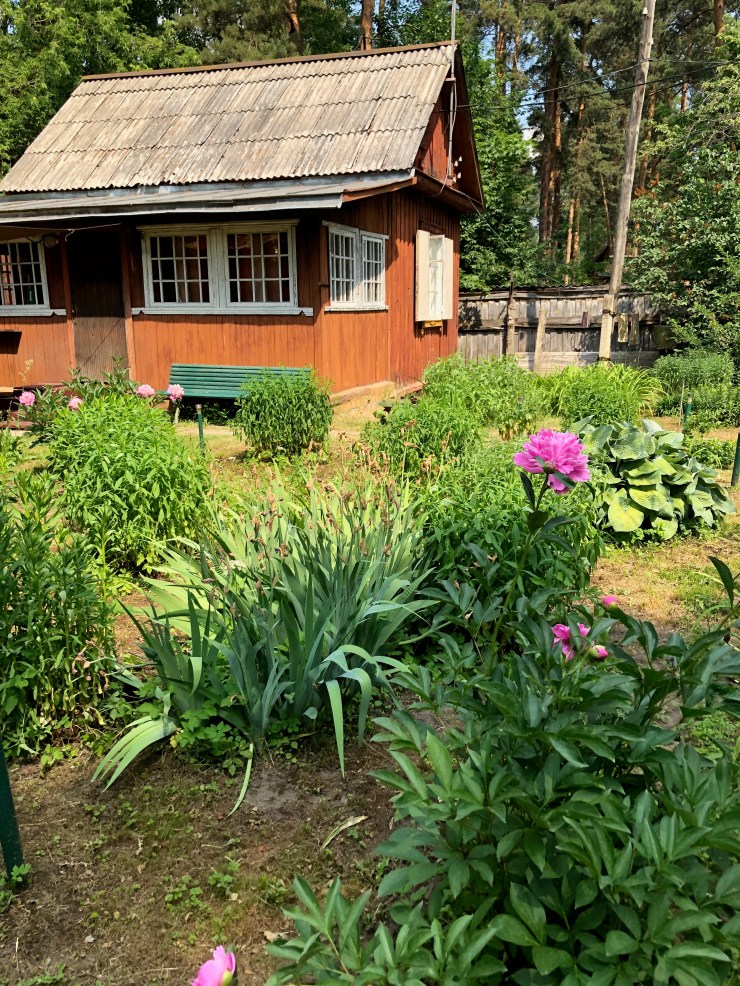
Dachas are quaint homes found outside of Russian cities used by Russians for holidays and vacations. Most dachas include a small house with basic essentials and a small garden where Russians grow herbs, berries, and vegetables. Recently, the students spent the day at a dacha getting a truly Russian experience. Marylyn Gafford wrote her thoughts on the visit.
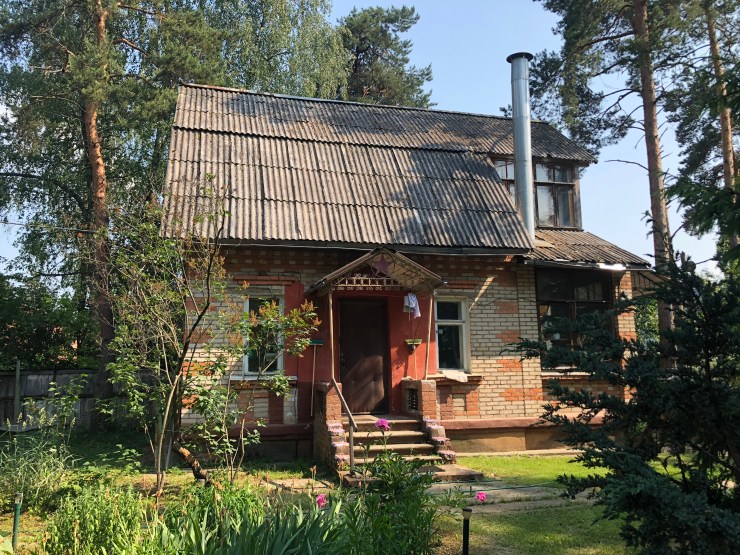
On Sunday June 9, our group hopped on a train to get out of Moscow for the day and experience an essential part of Russian culture: the Dacha. Most Russian families own one of these vacation homes in the countryside and will often spend weekends or summers there to get out of the city. “Masha’s Dacha” is an authentic, family-owned Dacha located about one hour outside of Moscow that hosts tourist groups in order to provide them with a full cultural experience. Masha, whose parents own the Dacha, and her helper Marina met us at the train station in Moscow early Sunday morning to start the day.
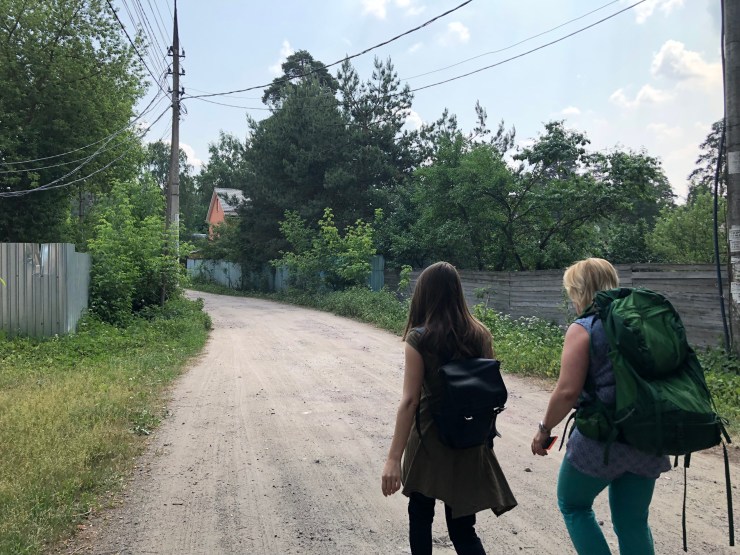
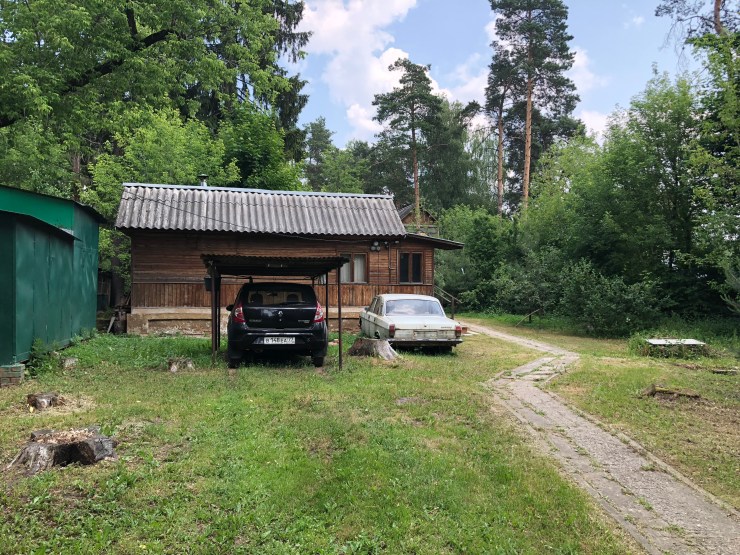
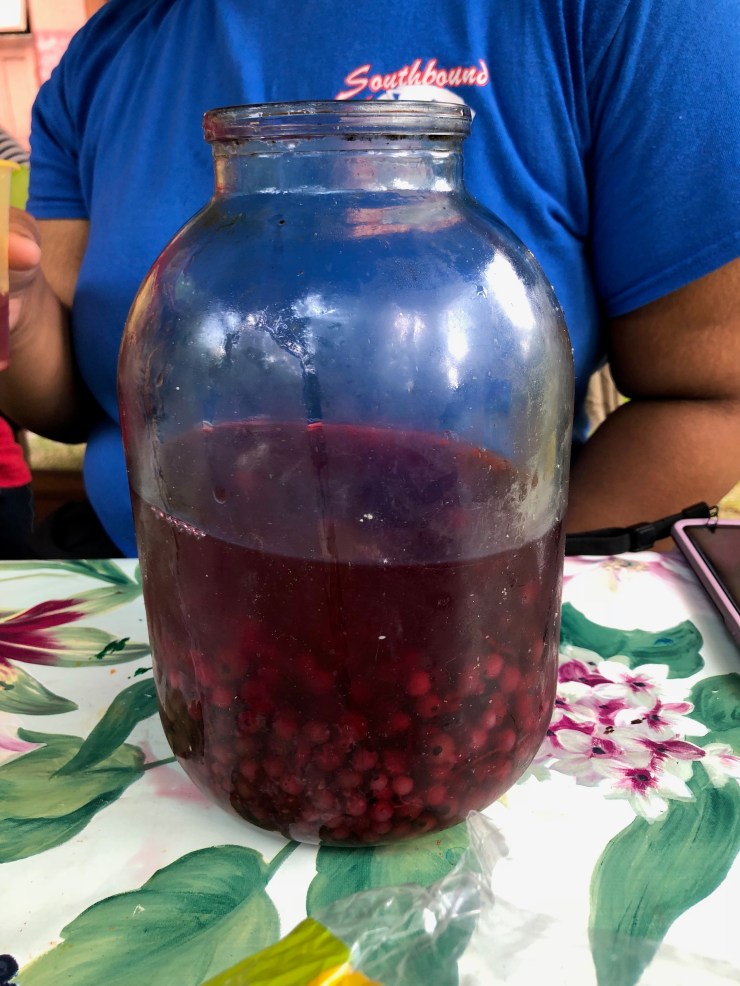
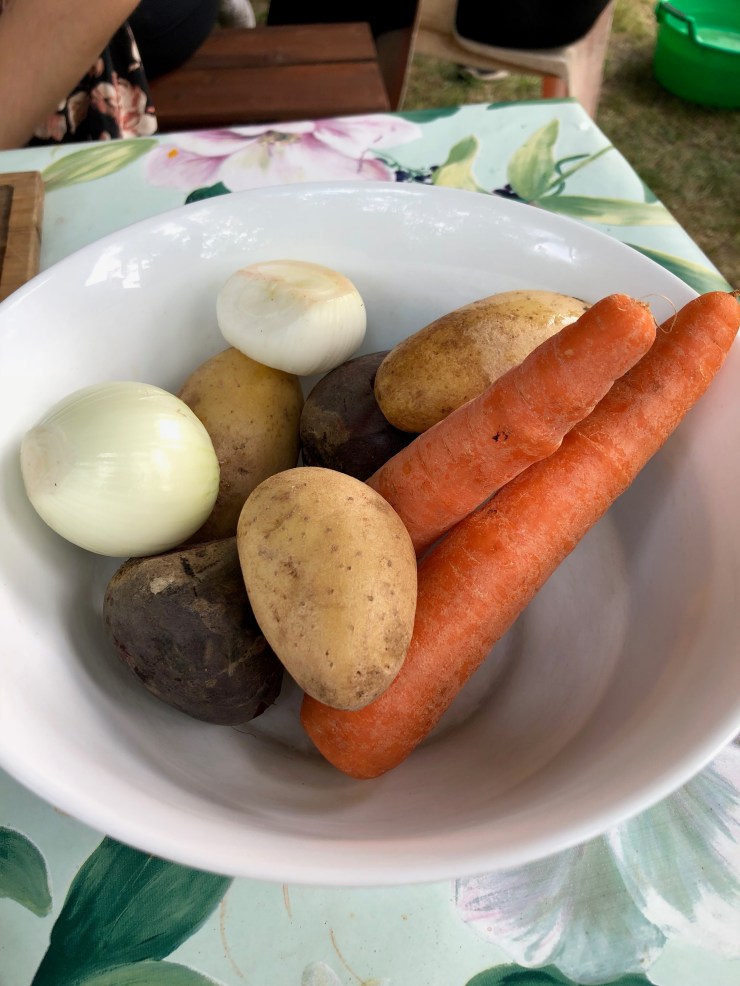
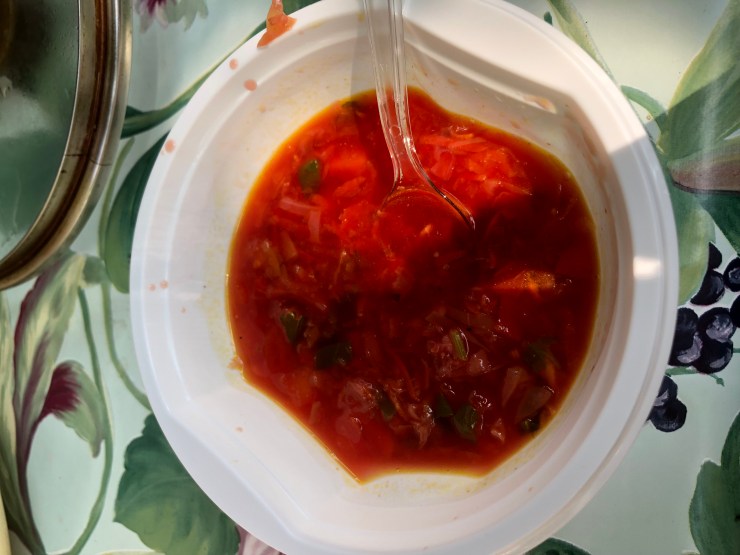
Masha’s Dacha itself is a fenced in property made up of several different buildings including a main house, a guest house, an outhouse, and a sauna, which makes it feel of like a private hideaway. As soon as we arrived, we were led to the picnic tables set up in the shade outside of the guest house, given glasses of fresh red currant kompot, and then put to work making our first dish of the day: borsch. Right away the group was split into two teams (“AK and the Hex Girls” and “Bolshoi Ballers”), and we would spend the rest of the day competing against each other in everything we did. Masha’s father, Sergei, was to be the judge of the borsch-off, so the pressure was on to prepare the soup like a true Russian. Each team worked together to peel, slice, chop, and shred all of the necessary ingredients, and only after lots of hard work and slaving away in the kitchen (without air conditioning) were we rewarded with the finished product. In the end, my team, the Bolshoi Ballers, lost by a narrow margin due to lack of salt. It was a crushing defeat, but we managed to enjoy our borsch nonetheless.
As Masha and Marina prepared the ingredients for the next cook-off, Sergei asked us to help him cut firewood with a hand saw. This too they made into a competition (who could cut the wood the fastest?), so needless to say there were moments where loss of limb was a concern. We also now know that we would not make it in the wild.
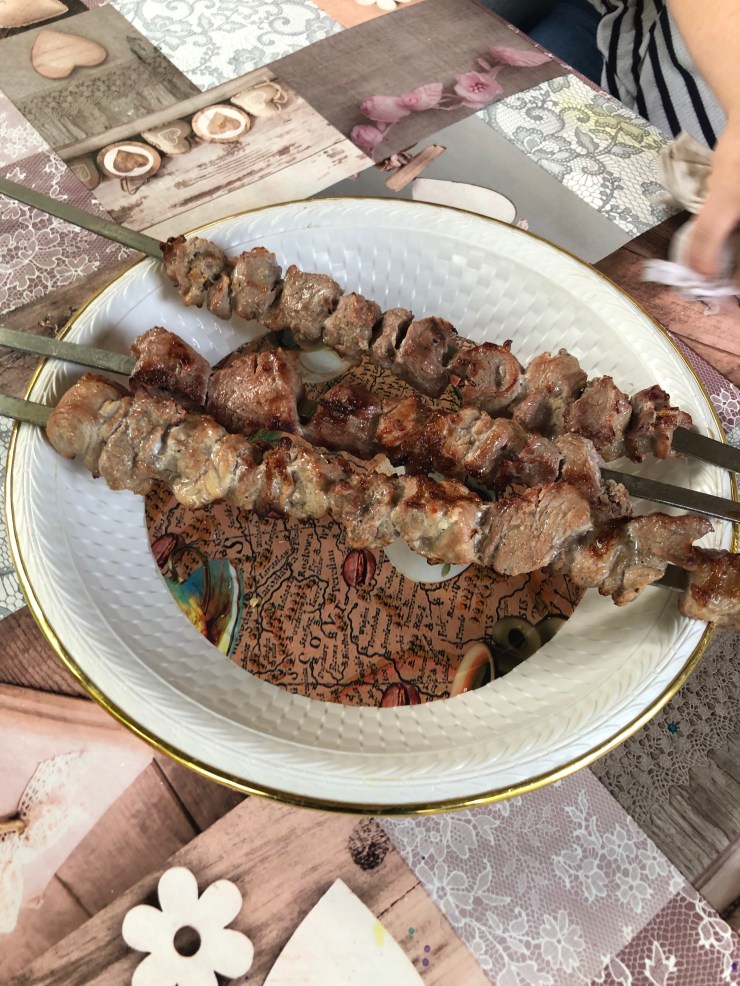
Following the wood cutting, we were ready to begin making pelmeni, or Russian dumplings. The dough and meat filling were already prepared for us, so our only job was to actually form the dumplings by hand. While Marina preferred to measure the dough out by cutting it into circles with a cup and rolling it flat with a rolling pin (the “Moscow” method), Masha showed us the true Siberian method of using only your hands to measure and roll the dough. I definitely preferred the Siberian method, as it was quicker and easier. Although in the end some pelmeni looked better than others, luckily for us the appearance didn’t really affect the taste. After the pelmeni were formed and ready to cook, Masha and Sergei began preparing the shashlik. Many simply call shashlik “Russian barbecue”, but in reality it is its own art form. To make authentic shashlik, you burn wood down into coals in a special grill called a mangal, and then cook the skewered meat over the coals for an extended period of time so that it turns out juicy and tender. Our dinner that night at the Dacha consisted of pork shashlik, pelmeni, and, to top it all off, beer!
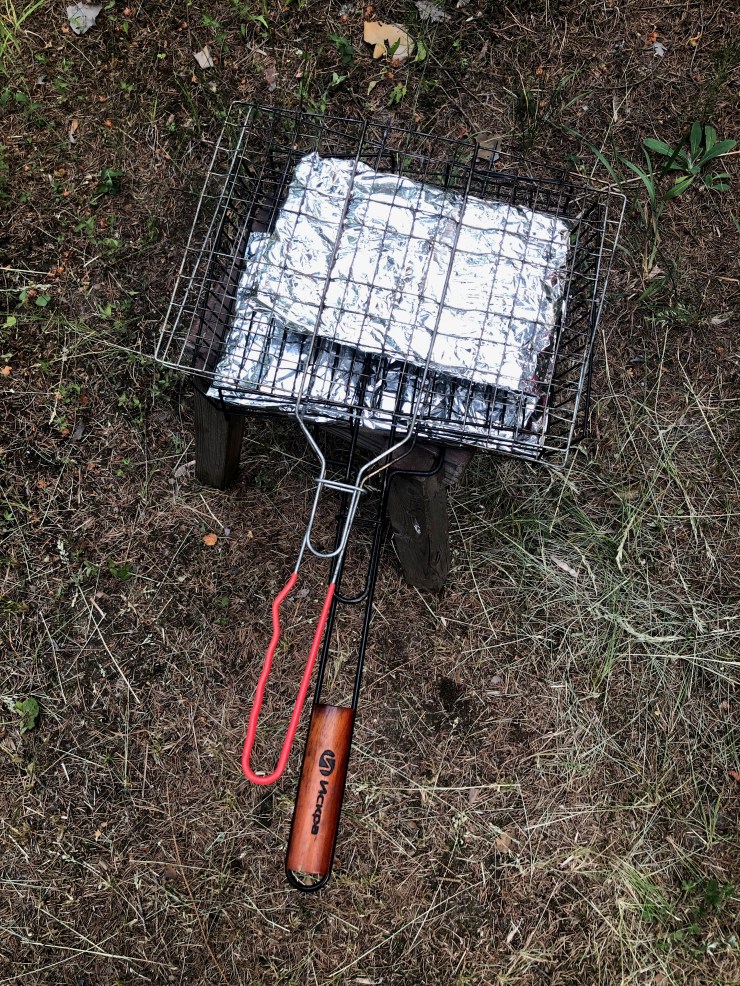
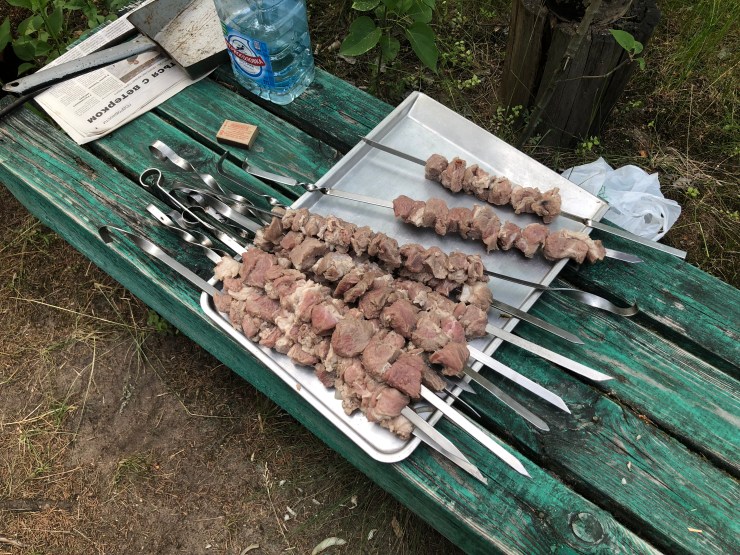
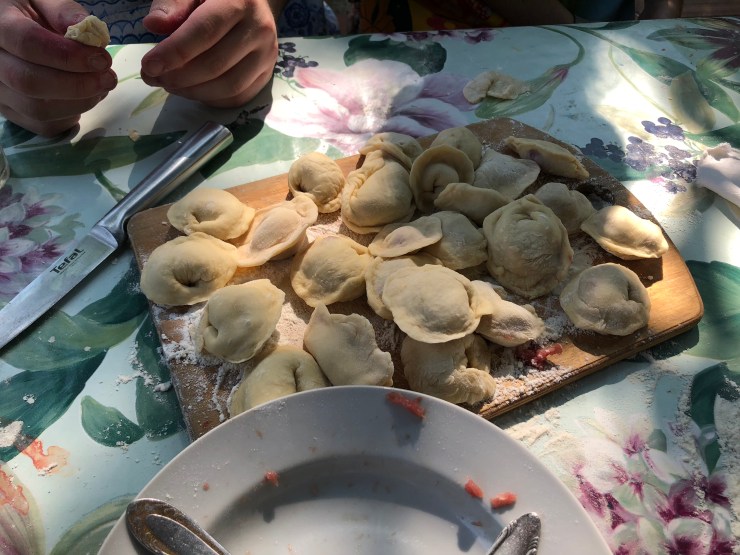
While preparing three full Russian dishes might seem like enough of a cultural experience, that was by no means all we did at the Dacha. In between meals, we did Russian trivia (Bolshoi Ballers took the lead in that one), sang Russian songs with Sergei accompanying us on the accordion, painted our own wooden matryoshka dolls, and even did some traditional Russian dances. We finished out the day with tea and cookies and, full and exhausted, somehow managed to make it back to Moscow to prepare for class the next day.
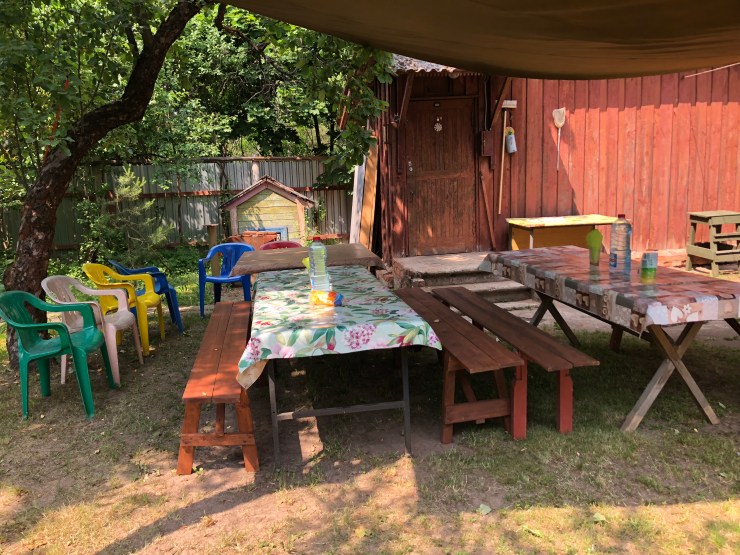
This excursion to the Dacha was by far my favorite, if only because I could feel how much Masha, Marina, and Sergei truly wanted us to experience their culture. They worked tirelessly to ensure that we not only had a great time, but also learned along the way. Before coming to Moscow, it was almost impossible to get rid of the stereotypes about Russia that had been with me for so long. In the back of my mind there always remained this idea of cold and unfriendly people, gray cities, and tasteless food. But every day since I’ve been in Moscow those stereotypes have been disproven again and again, especially at Masha’s Dacha.
 USA in Russia 2019