The Kremlin is the center of Moscow and has represented the seat of Russian and Soviet power for over 100 years. Zoe Kontak talks a little bit about our visit to the Moscow Kremlin.
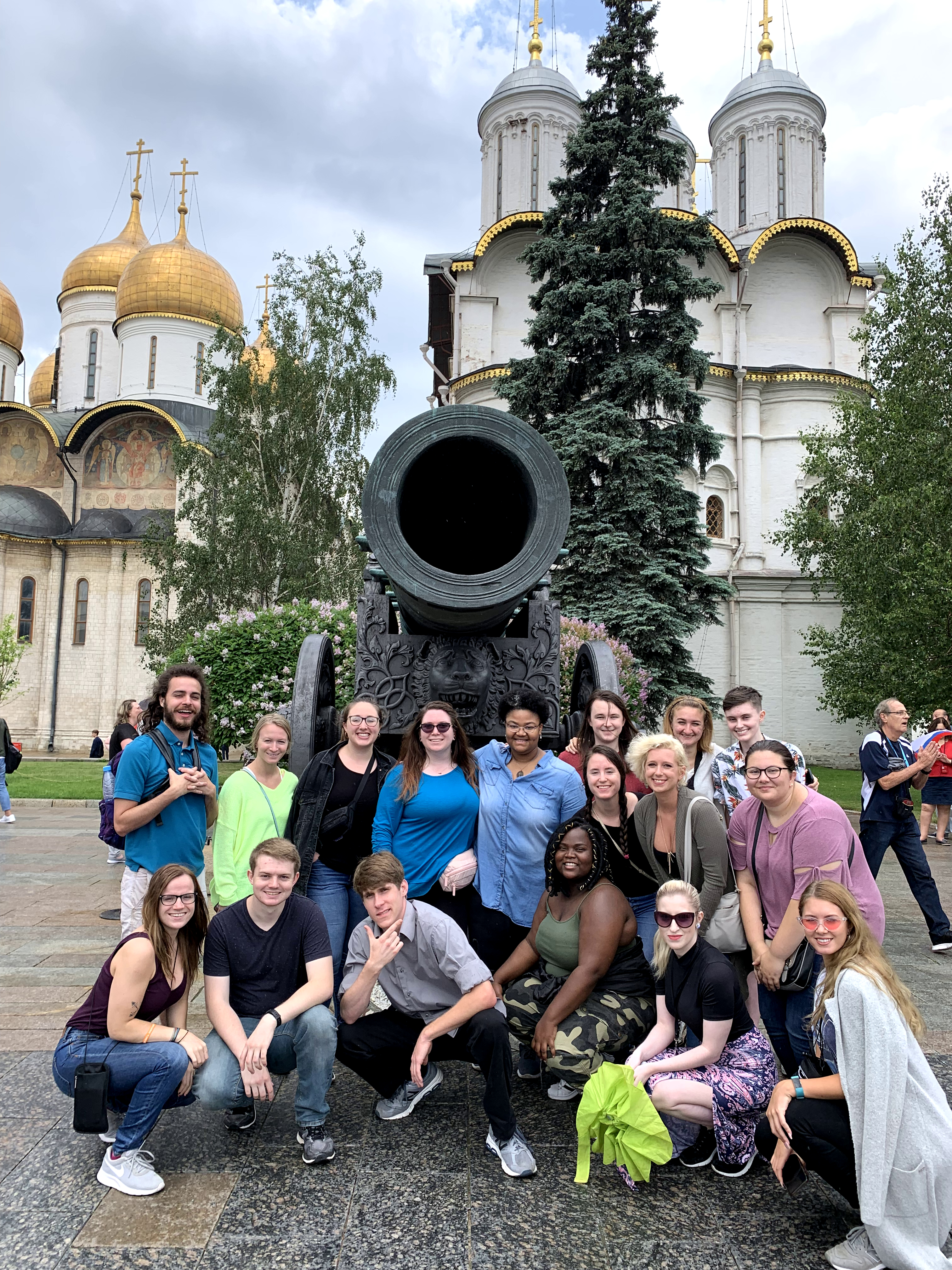
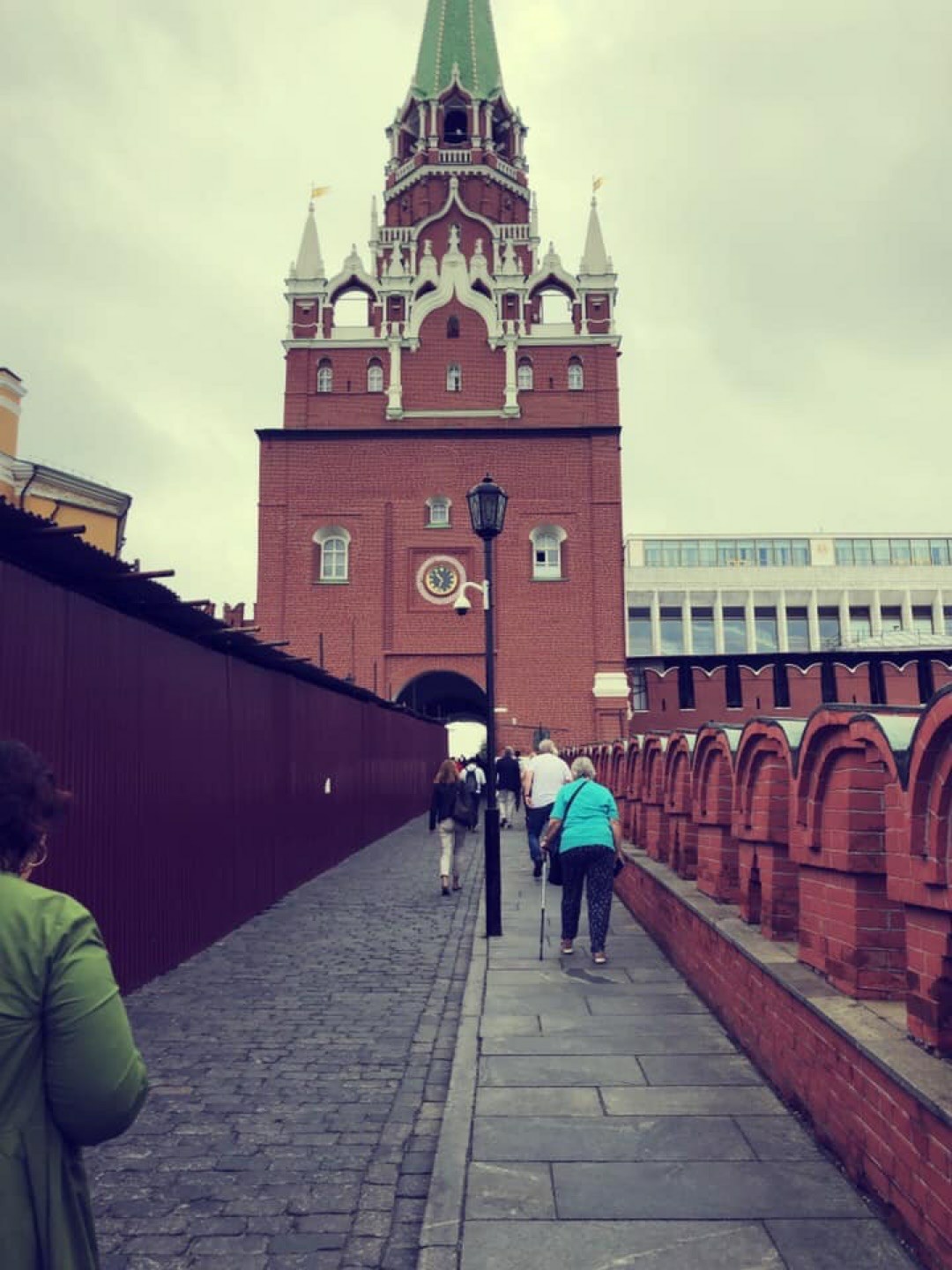
When people think of the Kremlin, 99% of the time they are automatically referring to the one in Moscow, unaware that there are twelve Kremlin’s total all throughout Russia. I expected the Kremlin, (which literally translates to ‘fortress’) to just be one central building; not a collection of them, huddled together and protected by a large brick wall, which is called the ‘Kremlin Wall’. There are a grand total of nineteen towers within the walls, and one more tower, the Кутафья башня, placed outside the Kremlin Wall. Like most other historical buildings that are still around today, the Kremlin has been destroyed and rebuilt several times. The first Kremlin, which was built in 1147, was made from wood and consequently burned down. Within the Kremlin Walls used to be the entirety of the Moscow population, with the walls serving as the first defense in case of an attack on the city.

To start our tour off, we walked through Alexandrov’s garden and saw the steps that the last royal family of Russia, the Romanovs, had stood. It was a surreal experience to be standing in the same area that you have only seen in history textbooks and online news articles. Throughout history, the Kremlin has housed various rulers, where Moscow was the capital up until Peter the Great came along. For a little over 200 years, St. Petersburg was the capital, named for Peter the Great where it stayed the capital until the Bolsheviks seized power in 1917.
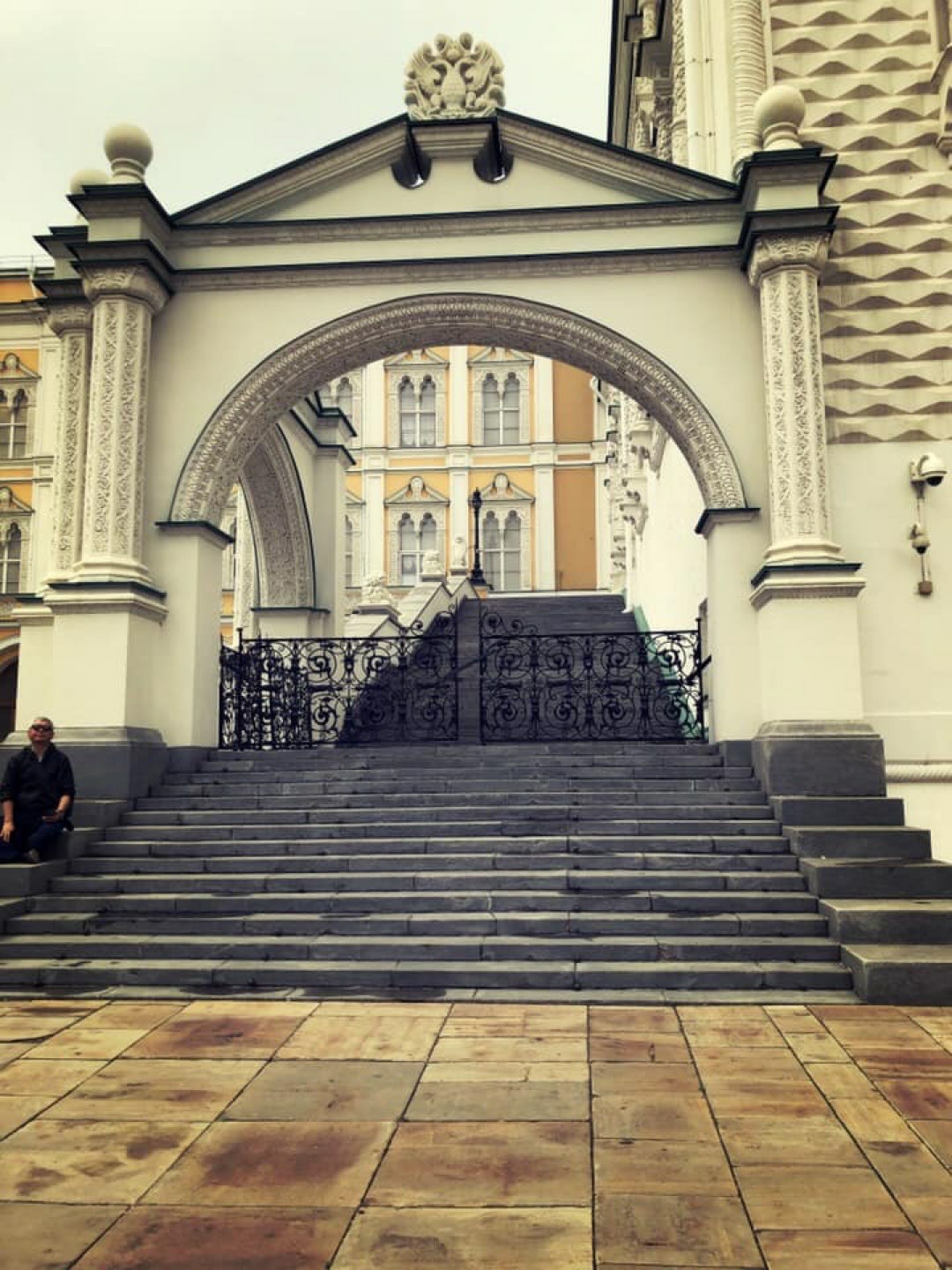
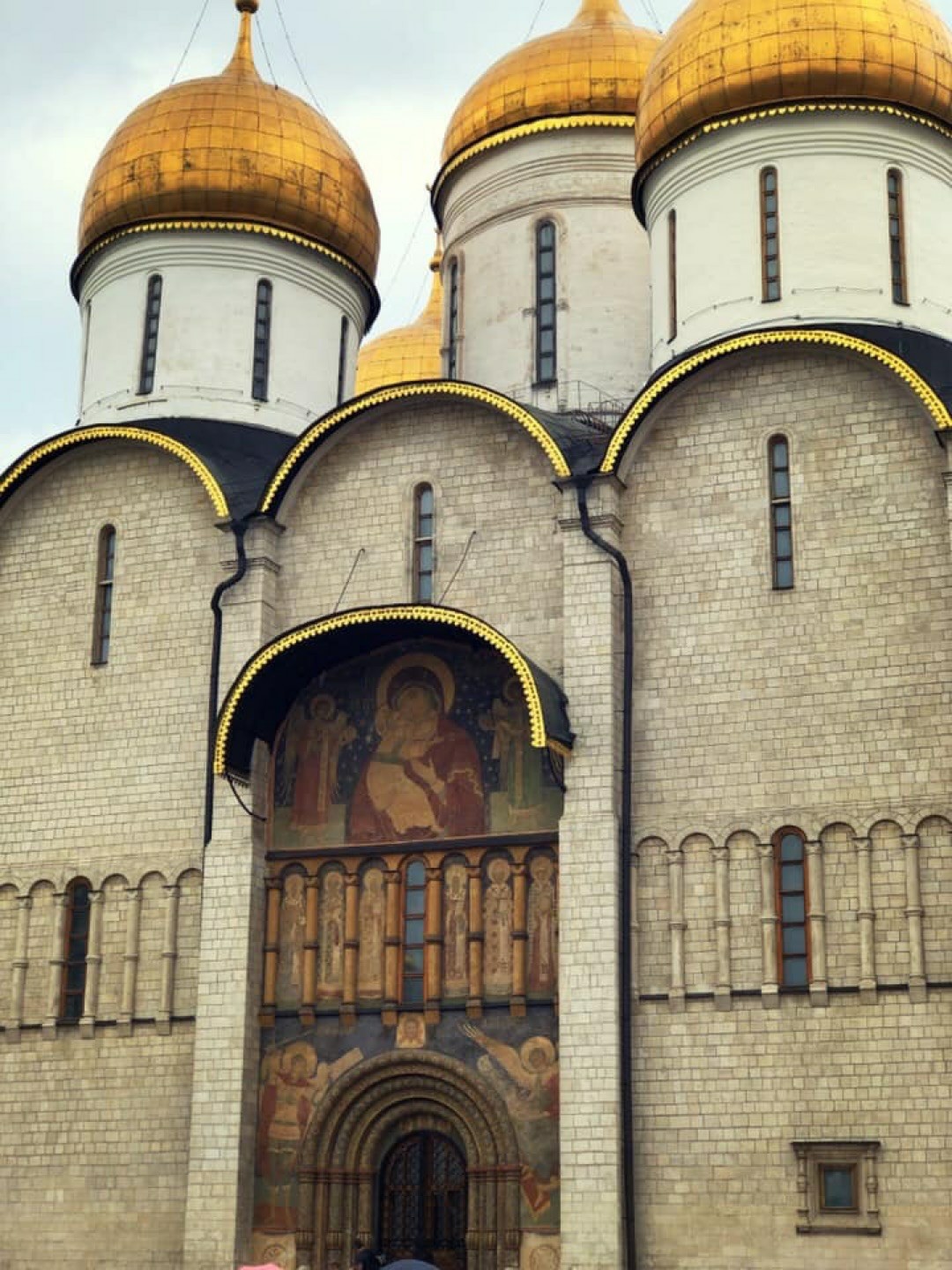
In the present day, most buildings that are not being used to house the current President of Russia, are used as a museum for ancient artifacts that were preserved throughout their bloody history. There were several different parts of the Kremlin that we toured: The Kremlin armory, one of its many churches, and the biggest cannon and bell in the world, (named the ‘Tsar Cannon’ and the ‘Tsar Bell’, respectively). The latter of which is cracked because it was molded and cast in the ground. When they tried to lift it up, the 200-ton bell was too heavy. It is now on display in its original spot, with the cracked portion on display next to it.
 USA in Russia 2019